


 Damage
  Loss
Loss  Theft
Theft 


Wall-Mounted Dehumidifiers: What They Are & How They Work

If you need a long-term solution for managing indoor humidity, a wall-mounted dehumidifier could be your ideal choice. Unlike portable floor units, these dehumidifiers attach directly to — or recess into — your wall, quietly pulling excess moisture from the air so your home or commercial building stays comfortable year-round.
How exactly do these wall units operate, what settings are they best suited for, and which style is right for your space? Read on and we will walk you through everything you need to know.
In This Article
• What Is a Wall-Mounted Dehumidifier?
• How Do Wall-Mounted Dehumidifiers Operate?
• Best Applications for Wall Dehumidifiers
• In-Wall vs. On-Wall: Choosing the Right Type
• Key Installation Factors
• Recommended Wall-Mounted Dehumidifier
• Additional Dehumidifier Resources
What Is a Wall-Mounted Dehumidifier?
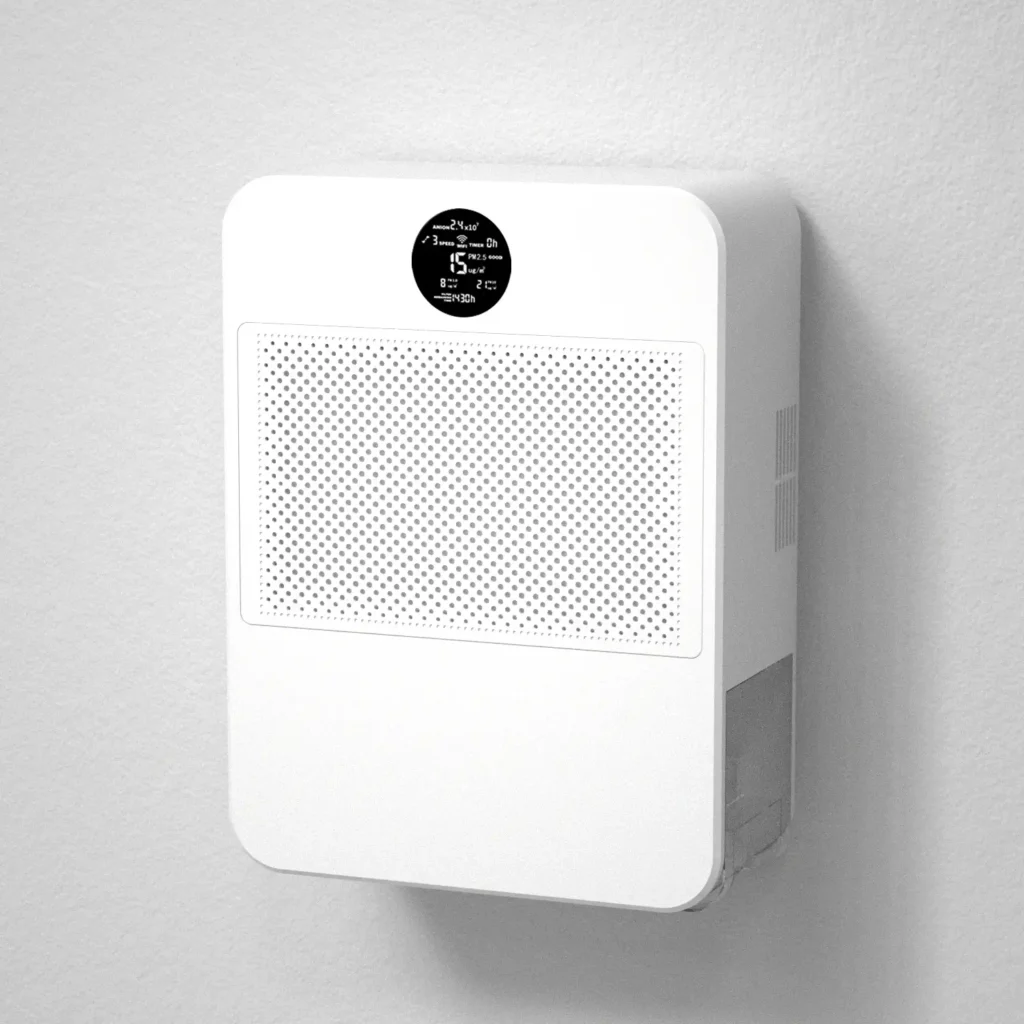
Most people are familiar with freestanding dehumidifiers — those boxy units that sit on the floor, draw moisture out of the air, and require you to periodically dump a water collection bucket. A wall-mounted dehumidifier takes a fundamentally different approach.
As the name suggests, wall-mounted dehumidifiers are installed directly in or on your wall. In-wall models recess between the studs for a clean, flush appearance — almost like a built-in appliance. On-wall models mount to the surface of the wall, offering a simpler installation that works across drywall, concrete, masonry, stucco, and other materials.
Both styles free up your floor space entirely, operate independently of your HVAC system, and are typically tankless — meaning they drain continuously through a hose instead of relying on a bucket you need to empty.
How Do Wall-Mounted Dehumidifiers Operate?
Although individual specifications differ from brand to brand, the core mechanism of these refrigerant-based (compressor) dehumidifiers follows the same three-stage process:
Air Intake — A built-in fan draws humid air from the room into the dehumidifier and across a set of refrigerated coils.
Condensation — As warm, moist air passes over the cold coils, moisture condenses into water droplets. This collected water is either stored temporarily or — in most wall-mounted units — drained automatically through a connected hose or plumbing line.
Dry Air Release — The now-dehumidified air is pushed back into your living or working space, creating a noticeably more comfortable environment.
Best Applications for Wall Dehumidifiers
Wall-mounted dehumidifiers are incredibly versatile. They excel in a wide range of residential and commercial settings, including:
Apartments & Condos
Single-Family Homes
New Construction
Hotels & Hospitality
Schools & Dorms
Mixed-Use Buildings
Offices & Workspaces
Basements & Garages
In-Wall vs. On-Wall: Choosing the Right Type
Deciding between an in-wall and an on-wall dehumidifier comes down to your unique space and installation requirements. Here is how the two styles compare:
Key Factors to Consider Before Installation
Before you commit to installing a wall dehumidifier — whether in-wall or on-wall — think through these important considerations to ensure smooth setup and optimal performance:
Location & Room Size
Consider the total square footage the dehumidifier needs to cover. Verify that the chosen installation spot does not block any air vents and that your floor plan supports adequate airflow throughout the space.
Drainage Setup
Most wall-mounted units drain continuously through a hose. Decide whether you will rely on gravity drainage or a condensate pump, and confirm that a drain point — such as a floor drain, sink, or plumbing line — is accessible from your installation location.
Power Source
Determine whether you prefer a plug-in unit that connects to a standard wall outlet or a hardwired installation. Some models support both options — choose the one that best suits your electrical setup.
Wall Material & Depth
Examine the wall material where the unit will be mounted. For in-wall installations, knowing the depth of the wall cavity (2×4 or 2×6) is essential. For on-wall installations, the surface material affects the mounting hardware you will need.
Recommended Wall-Mounted Dehumidifier
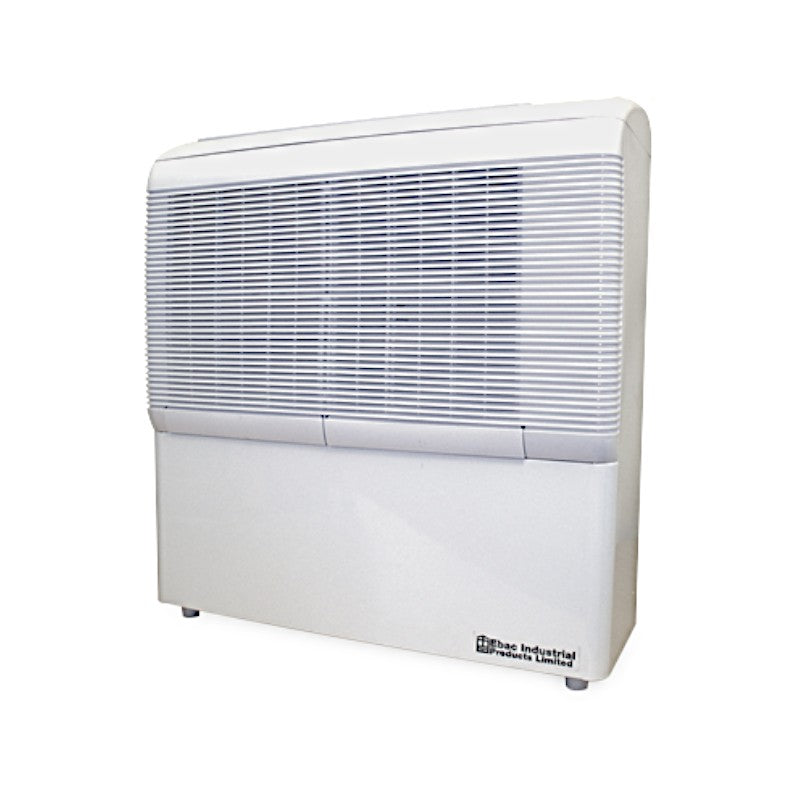
If you are looking for a high-performance wall-mounted dehumidifier that blends seamlessly into any space, the Ebac AD850E is an outstanding option available right here at Backyard Provider.
Additional Dehumidifier Resources
Wall-mounted dehumidifiers — whether recessed into the wall or surface-mounted — function much like their freestanding counterparts but with the major advantage of saving space and delivering a cleaner look. Keep in mind that they still need a drainage solution, so plan your plumbing or hose route before installation begins.
Explore more articles on our blog to learn about sizing dehumidifiers for basements and crawl spaces, understanding indoor humidity levels, and finding the best unit for your specific needs. If you have any further questions, our product experts are happy to help — reach out anytime through our contact page.
Ready to Take Control of Your Indoor Humidity?
Browse our full collection of dehumidifiers and find the perfect fit for your home or commercial space.
Shop Ebac AD850E