


 Damage
  Loss
Loss  Theft
Theft 


How Do E-Bikes Actually Work? Everything You Should Know

Riding an electric bike feels like having the wind permanently at your back. You can cover greater distances without breaking a sweat, cruise through city streets with ease, and even save a noticeable amount of money compared to driving. But what exactly makes these two-wheeled machines tick?
Most people are aware that an e-bike comes equipped with a motor and a battery. Beyond that, the inner workings remain a mystery to many riders. Let's pull back the curtain and explain everything you need to understand about how electric bikes function — from pedal mechanics to battery charging.
A Quick Look at E-Bike History
While electric bikes seem like a recent invention, the concept actually dates back well over a century. Early patents for motorized bicycles appeared in the 1890s, though the technology of that era was far too limited to bring them to market in any meaningful way. Battery technology was crude, and combustion engines dominated personal transportation for decades.
Fast forward to the modern era and things look entirely different. Breakthroughs in electric motor design, lithium-ion batteries, and lightweight materials have made e-bikes practical, affordable, and highly desirable. They now represent one of the smartest ways to get around town — combining the health benefits of cycling with the convenience of motorized assistance. In terms of reliability and eco-friendliness, they frequently outperform traditional options.
E-Bike or Pedelec? Understanding the Difference
There are essentially two categories of electric bicycles, and the distinction matters more than most people realize. In everyday conversation, the terms are used interchangeably, but technically they describe different experiences.
A true e-bike is fitted with a throttle-driven electric motor that can propel the bike independently, typically up to speeds of about 20 mph. Because of this capability, many regions require registration, a valid license, and insurance — much like a moped.
A pedelec, on the other hand, is a pedal-assist bicycle. The motor only activates when you're actively pedaling, and it tops out at a moderate speed — usually around 15 mph. The beauty of a pedelec is that it's legally treated like a standard bicycle in most places, meaning you can hop on and ride without any special paperwork. It simply feels like riding a regular bike, only significantly easier.
What Goes Into Building an E-Bike?
At its core, every electric bike is constructed in a broadly similar fashion, regardless of the brand or price point. This makes it relatively easy to understand what makes them tick. The essential building blocks include:
Frame
Visually indistinguishable from a traditional bicycle frame. Various styles exist — from sleek city designs to rugged mountain frames — each built to support the added weight of a motor and battery.
Motor
The electric motor can be positioned in several ways — some bikes use a hub motor integrated into the front or rear wheel, while others feature a mid-drive motor mounted near the pedals for better weight distribution.
Battery
The battery is the powerhouse. It supplies the motor with the energy it needs. Modern lithium-ion batteries can deliver impressive range — some models handling 60 miles or more before needing a recharge.
Display
Most e-bikes feature an onboard display — typically mounted on the handlebars — that shows essential ride data like speed, distance traveled, battery status, and the current level of pedal assistance.
Cables & Wiring
All electronic components are linked together through a network of cables. On well-designed models, these cables run internally through the frame for a clean, streamlined look and added protection from the elements.
In simple terms, an e-bike is just a bicycle that has been enhanced with a motor and a battery. The electrical energy stored in the battery flows to the motor, giving you that extra push — whether you're commuting to work or exploring a scenic trail.
Motor & Battery: The Heart of Every E-Bike
Modern e-bikes have evolved to the point where they can easily be mistaken for standard bicycles at first glance. The motor is typically compact and discreetly integrated into the wheel hub or frame, making it difficult to spot. A bike equipped with a full-size hub motor still looks remarkably conventional.
When it comes to power, most e-bikes operate with motors rated around 250 watts. While that might not sound like much, it's more than enough for everyday riding — climbing hills, accelerating from a standstill, and maintaining steady cruising speeds. For most uses, this wattage is considered perfectly adequate, and the bike behaves just like a traditional one when the motor isn't engaged.
Battery life depends heavily on how you ride. Factors like terrain, rider weight, wind conditions, and the level of motor assistance all play a role. A well-maintained battery on a quality e-bike should last at least a few years of regular use before showing significant degradation, giving you reliable performance over thousands of miles.
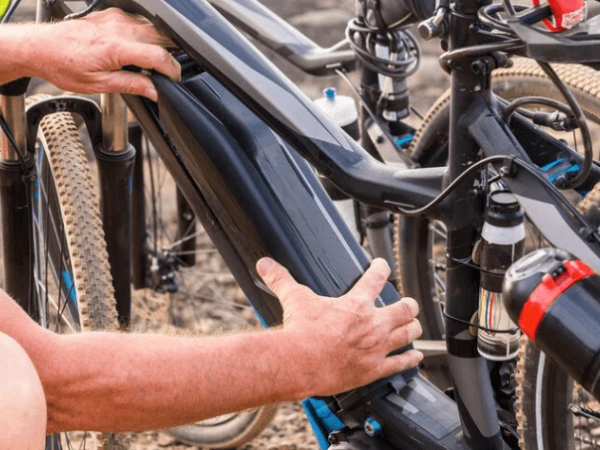
How Does Charging an E-Bike Work?
One of the most common concerns people have about e-bikes is charging. The good news? It's as simple as plugging in your phone. Most e-bikes can be charged using a standard household power outlet. Whether your outlet is in the garage, the hallway, or even the basement, you can top up your battery with zero hassle.
Charge times vary depending on the battery's capacity. A typical battery will go from empty to full in roughly two to four hours. Ideally, you should avoid letting the battery drain completely before charging — keeping it between 20% and 80% helps preserve its long-term health. Think of it the same way you'd treat a smartphone battery.
As e-bikes grow in popularity, cities and municipalities have begun rolling out public charging stations specifically for electric bikes and scooters. These work much like electric car chargers — pull up, plug in, and you're back on the road. The cost is typically minimal, often around 20 cents for a full charge.
The Display: Your Ride's Command Center
Many modern e-bikes feature a built-in display integrated directly into the frame or handlebars. This isn't just for aesthetics — it serves a genuinely functional purpose. The display is typically designed to be sleek and unobtrusive while still protecting the sensitive electronics underneath from impacts, rain, and daily wear.
From a rider's perspective, the display provides all the essential information you need at a glance: current speed, remaining battery percentage, distance covered, and how much pedal assistance is being applied. While charging, it also shows the progress of the charge cycle, so you always know exactly when your bike will be ready to roll.
Why Ride an E-Bike? The Key Advantages
Rides just like a regular bike — no learning curve
Far cheaper to own than a car or scooter
Built tough with high-quality components
Zero emissions — great for the environment
Fun, practical, and perfect for daily commutes
Whether you need a reliable commuter, a weekend explorer, or a practical alternative to driving, an e-bike checks all the right boxes. Explore our selection to find the model that fits your lifestyle best.

The Bottom Line
Hopefully this guide has given you a clear picture of how e-bikes work and why they've become so popular. At their core, they combine a capable motor, a long-lasting battery, and smart engineering into a package that's genuinely enjoyable to ride.
A reliable motor, a powerful battery, and quality construction — those are the ingredients that make a great e-bike. And when you combine all of that with a design that looks and feels fantastic, you end up with something truly special.
ENGWE T14 Electric Mini Bike