


 Damage
  Loss
Loss  Theft
Theft 


Mastering MIG Welding for Mild Steel
Your Complete Resource for Successful Metal Joining Projects
MIG welding stands as the preferred method for joining mild steel across countless applications. This adaptable technique empowers both hobbyists and professionals to create strong, reliable welds for automotive repairs, home fabrication projects, structural work, and industrial manufacturing.
The beauty of MIG welding lies in its accessibility—with proper equipment and fundamental knowledge, anyone can master this essential metalworking skill.
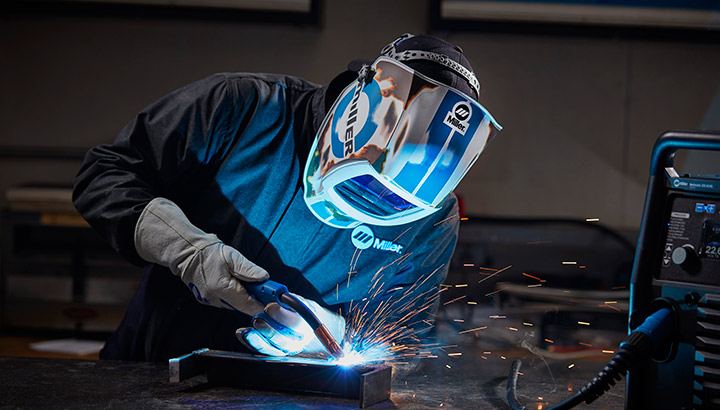
What Exactly Is MIG Welding?
MIG welding, which stands for Metal Inert Gas welding, employs a continuously fed wire electrode that melts to form the weld joint. The process utilizes shielding gas to protect the molten metal from atmospheric contamination, resulting in clean, strong welds.
This technique excels when working with mild steel because it delivers consistent heat application, minimal spatter, and excellent control over the welding process. The continuous wire feed allows for longer weld runs without interruption, making it ideal for both small repairs and extensive fabrication work.
Why Choose MIG Welding for Your Steel Projects?
Beginner-Friendly
The straightforward technique and forgiving nature make MIG welding perfect for those just starting their welding journey.
Exceptional Speed
Continuous wire feed enables faster welding compared to stick or TIG methods, boosting productivity significantly.
Versatile Applications
From thin sheet metal to thick structural steel, MIG welding handles a remarkable range of material thicknesses.
Clean Results
Produces minimal slag and spatter, requiring less post-weld cleanup and delivering professional-looking finishes.
Cost-Effective
Lower consumable costs and reduced cleanup time translate to better value for your welding projects.
Consistent Quality
Delivers reliable, repeatable results that meet demanding quality standards across various applications.
Essential Preparation Steps
Success in MIG welding begins long before you strike an arc. Proper preparation ensures optimal results and prevents common welding defects.
Always start by thoroughly cleaning your mild steel surfaces. Remove all rust, paint, oil, and mill scale using a wire brush, grinder, or chemical cleaner. Even microscopic contamination can compromise weld quality, causing porosity and weak joints.
Ensure your workpiece is properly secured and positioned. Stable positioning prevents movement during welding and allows you to maintain consistent technique throughout the entire weld.
Selecting Your MIG Welding Equipment
Choosing the right MIG welder makes all the difference in achieving quality results. Consider your typical project requirements, available power supply, and budget when making your selection.
For mild steel work, you'll want a machine capable of producing between 30 and 140 amps for general fabrication. Lighter gauge materials require lower amperage settings, while thicker steel demands higher power output.
Power Requirements
Evaluate your available electrical service. Standard 120V outlets work for lighter-duty machines, while 240V circuits power professional-grade welders capable of handling thicker materials and longer duty cycles.
Wire Feed System
Look for smooth, consistent wire feeding mechanisms. Quality drive rolls and properly tensioned systems prevent wire feeding problems that can ruin your welds.
Duty Cycle Rating
This specification indicates how long you can weld continuously within a ten-minute period. Higher duty cycles allow for extended welding sessions without overheating the machine.
Portability Needs
Consider whether you need to move your welder frequently. Lighter machines with wheels offer convenience, while stationary units may provide more robust features.
Professional-Grade MIG Welding Solution

The Forney 242 represents an excellent choice for serious fabricators and professionals requiring reliable performance across diverse applications. This dual-voltage machine adapts to your power requirements while delivering consistent, high-quality welds.
Forney 242 Dual MIG WelderEssential Components for MIG Welding
Beyond the welder itself, several components work together to create successful welds. Understanding each element helps you optimize your setup for the best results.
Critical Components
For mild steel, ER70S-6 wire provides excellent results for most applications. This copper-coated steel wire comes in various diameters, with 0.030" and 0.035" being most common for general fabrication work.
A mixture containing 75% argon and 25% carbon dioxide offers optimal protection for mild steel welding. This combination provides good arc stability, minimal spatter, and strong penetration.
These consumable components must match your wire diameter exactly. Replace them regularly as worn tips cause erratic wire feeding and poor arc quality.
Keep nozzles clean and free from spatter buildup. Blocked nozzles disrupt gas flow patterns, leading to contamination and weld defects.
Match the groove size to your wire diameter. Improper drive roll selection causes wire deformation, feeding inconsistencies, and frustrating welding problems.
Configuring Your MIG Welder
Proper machine settings form the foundation of quality welds. While modern welders often include helpful charts, understanding the principles behind these settings gives you greater control over your results.
Voltage and Wire Speed Relationship
These two parameters work in tandem to create the perfect arc. Voltage controls the arc length and width of your bead, while wire speed determines how much filler metal you're depositing.
Higher voltage creates a wider, flatter bead with greater penetration. Lower voltage produces a narrower, more convex bead profile. Wire speed must increase proportionally with voltage to maintain the proper arc length.
Start with manufacturer recommendations for your material thickness, then fine-tune based on your specific welding technique and joint configuration.
Thin Materials
Sheet metal under 1/8" requires lower voltage (15-17V) and moderate wire speeds to prevent burn-through while maintaining adequate penetration.
Medium Thickness
Steel between 1/8" and 1/4" works well with mid-range settings (17-20V), balancing penetration with bead appearance.
Heavy Plate
Thick materials over 1/4" demand higher voltage (20-24V) and faster wire speeds to achieve full penetration and proper fusion.
Gas Flow Rate
Set your flowmeter between 15-25 cubic feet per hour. Too little gas allows contamination, while excessive flow creates turbulence.
Important Safety Note: Always wear appropriate personal protective equipment including welding helmet with proper shade rating, flame-resistant clothing, welding gloves, and closed-toe leather boots. Ensure adequate ventilation in your work area to prevent harmful fume exposure.
Mastering Welding Technique
Technical knowledge means little without proper execution. Developing solid technique requires practice, patience, and attention to fundamental principles.
Gun Angle and Travel Speed
Maintain a push angle of approximately 10-15 degrees, with the gun pointing in your travel direction. This technique, called forehand welding, provides better visibility and produces cleaner welds with less spatter.
Hold the contact tip approximately 3/8" to 1/2" from the workpiece. Too close causes the tip to weld to your work, while too far creates an unstable arc and excessive spatter.
Travel at a consistent speed that allows proper penetration without burning through. Your bead should be approximately twice the width of your wire diameter.
Start Position
Begin at the edge of your joint with the gun at the correct angle. Ensure your gas is flowing before triggering the arc to prevent contamination.
Arc Initiation
Squeeze the trigger and immediately establish your travel pattern. The first moments are crucial for setting up a quality weld.
Steady Movement
Move smoothly along the joint, watching the puddle carefully. The molten metal should flow evenly behind your arc, creating consistent ripples.
Proper Termination
At the end of your weld, pause briefly to fill the crater before releasing the trigger. This prevents crack formation at the weld termination.
Common Challenges and Solutions
Troubleshooting Guide
Reduce wire speed slightly or increase voltage. Check for contamination on your workpiece and ensure proper gas flow. Worn contact tips also contribute to spatter problems.
Insufficient shielding gas protection causes this defect. Verify your gas flow rate, check for leaks in your hoses, and ensure your nozzle isn't clogged. Wind and drafts can also blow gas coverage away from the weld.
Lower your voltage and wire speed settings. Consider using a backing material or adjusting your travel speed to reduce heat input on thin materials.
Increase voltage and ensure proper joint preparation. Your travel speed may be too fast, or your wire diameter too large for the material thickness.
Check drive roll tension, replace worn contact tips, and inspect your liner for kinks or contamination. Ensure your wire spool rotates freely without binding.
Joint Preparation Best Practices
Different joint configurations require specific preparation techniques to ensure successful welding outcomes. Understanding these requirements prevents frustration and wasted materials.
Butt Joints
For materials thicker than 1/8", bevel the edges to create a V-groove. This allows complete penetration through the entire joint thickness. Leave a small root opening (approximately 1/16") to ensure fusion at the bottom of the joint.
On thinner materials, a square butt joint works well without beveling. Ensure edges are straight and properly aligned using clamps or fixtures.
Lap Joints
Overlap materials by at least five times the thickness of the thinner piece. This provides adequate strength and prevents burn-through. Clean both contact surfaces thoroughly to ensure proper fusion.
T-Joints
Position the vertical member perpendicular to the base. For full-strength connections, weld both sides when possible. Adjust your gun angle to direct equal heat into both members, typically around 45 degrees to the base plate.
Corner Joints
Align pieces at the desired angle, usually 90 degrees. For thicker materials, consider beveling one or both edges. Inside corner joints require careful attention to avoid incomplete fusion in the root area.
Advancing Your Skills
Consistent practice with attention to detail transforms beginners into proficient welders. Focus on mastering fundamental techniques before attempting complex projects.
Practice Strategies
Start with simple bead-on-plate welds to develop muscle memory and arc control. Progress to basic joint configurations once you can produce consistent, straight beads.
Experiment with different settings to understand how changes affect weld appearance and quality. Keep notes on successful parameters for various material thicknesses.
Practice in all positions—flat, horizontal, vertical, and overhead. Each position presents unique challenges requiring adapted technique.
Join welding communities online or locally to learn from experienced practitioners. Watching skilled welders and asking questions accelerates your learning curve significantly.
Maintenance and Care
Regular maintenance keeps your equipment operating reliably and extends its service life. Establish a routine maintenance schedule to prevent unexpected failures.
Daily Checks
Clean spatter from the nozzle, inspect the contact tip for wear, and verify proper wire feeding. Check gas connections for leaks and ensure adequate gas supply.
Weekly Maintenance
Remove and clean the nozzle thoroughly. Check drive roll condition and tension. Inspect cable connections and verify all electrical connections remain secure.
Monthly Service
Replace the contact tip even if it appears functional. Clean or replace the liner if you notice feeding problems. Blow out internal components with compressed air to remove dust and debris.
Periodic Inspection
Examine cables for damage or wear. Test safety mechanisms to ensure proper function. Consider professional servicing annually for critical internal components.
Conclusion
MIG welding mild steel combines accessibility with professional capability, making it the ideal choice for countless metalworking projects. Success requires proper equipment, correct technique, and consistent practice.
Start with quality equipment that matches your needs and power availability. Master fundamental techniques through deliberate practice before attempting complex projects. Maintain your equipment regularly to ensure reliable performance.
Remember that every expert welder started as a beginner. Focus on continuous improvement, learn from mistakes, and celebrate your progress. With dedication and proper technique, you'll soon produce strong, attractive welds that stand the test of time.
Ready to Start Your Welding Journey?
Invest in quality equipment that grows with your skills. The right welder makes learning easier and delivers professional results from your very first project.
Forney 242 Dual MIG Welder